

Advanced Preanalytical Solutions: BD CBP Blood Collection Tubes
In molecular diagnostics and clinical research, the accuracy of downstream analysis depends entirely on sample integrity. Traditional blood collection tubes often allow rapid cellular degradation, nucleic acid enzymatic breakdown, or unwanted genomic DNA release.
BD CBP Tubes offer specialized preanalytical preservation, eliminating artifacts caused by sample transport, temperature shifts, and processing delays. Implementing these standardized preservation technologies ensures highly reproducible results in critical applications, including oncology, infectious diseases, and prenatal testing.
Key clinical Advantages
• Immediate Stabilization: Preserves vulnerable biomolecules instantly upon venipuncture
• Artifact Prevention: Inhibits ex vivo gene induction and cell lysis
• Extended Workflows: Allows flexible sample transport without immediate cold-chain logistics
• Enhanced Sensitivity: Maximizes the yield of low-abundance targets
PAXgene Blood ccfDNA Tube (CE-IVD)
Introduction
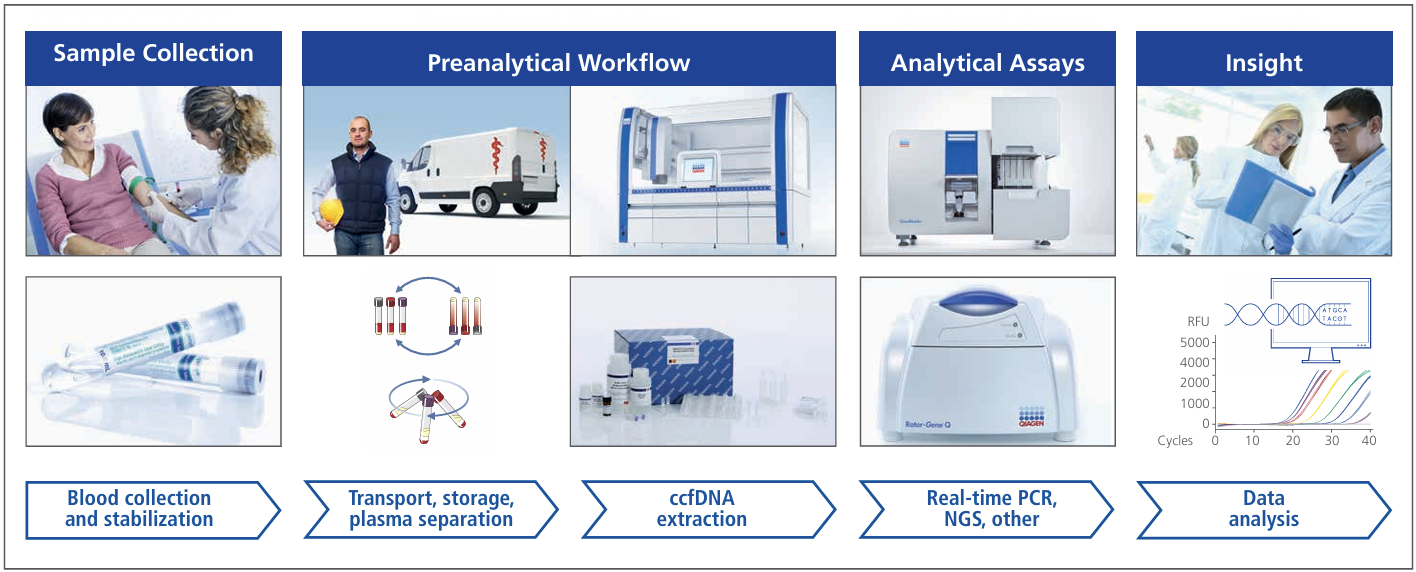
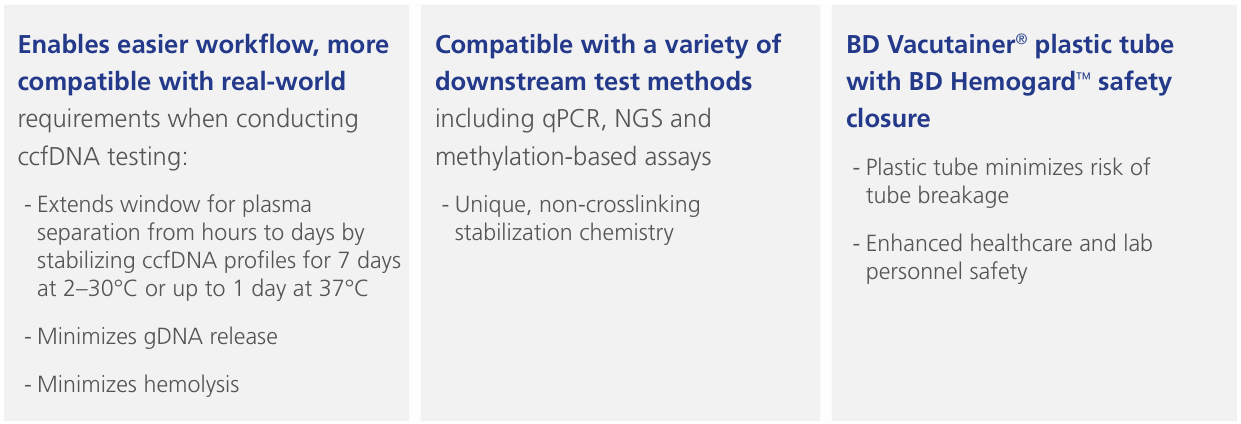
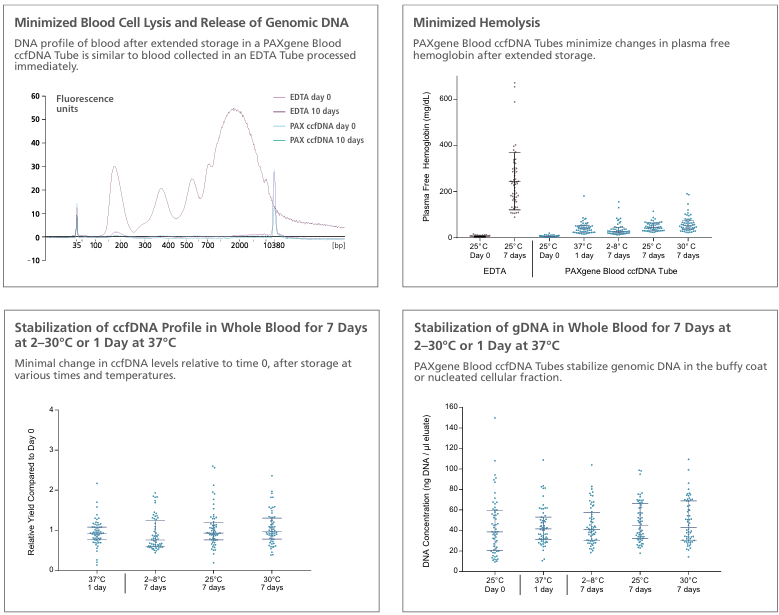
Circulating cell-free DNA (ccfDNA) is an attractive target for the diagnosis and monitoring of diseases, such as cancer, and for non-invasive prenatal testing (NIPT) that assess biomarkers otherwise only accessible through invasive procedures. Since ccfDNA is present in very low concentrations in the blood, efficient isolation from plasma is critical for successful downstream applications. The release of genomic DNA (gDNA) from lysed, apoptotic or necrotic white blood cells in whole blood poses an additional challenge by diluting the already low concentration of ccfDNA. Blood collection devices without cell stabilization additives (e.g., EDTA, ACD or citrate tubes) are widely used for ccfDNA applications. Plasma from EDTA tubes must be separated within 4–6 hours of blood collection in order to minimize gDNA release from lysing cells (1–3), whereas collection tubes with stabilization additives specifically for the isolation of ccfDNA allow for a longer storage and transport of specimens over a wide temperature range prior to plasma preparation. Commercially available blood stabilization tubes differ in stabilization chemistry (crosslinking or non-crosslinking), performance characteristics and form-and-fit (glass/plastic, volume, etc.). Validation of collection tubes along with other preanalytical variables helps to ensure an efficient workflow, the accuracy and reproducibility of test results and the safety of the healthcare worker.
PAXgene Blood ccfDNA Tube - For stabilization of ccfDNA whole blood
The PAXgene Blood ccfDNA Tube is a plastic, evacuated tube intended for collection, storage, and transport of human blood and stabilization of DNA in a closed tube for preparation of circulating, cell-free DNA (ccfDNA) from plasma and genomic DNA (gDNA) from nucleated cellular fraction, for use with molecular test methods that require ccfDNA or gDNA.
Ordering information

Introduction
The composition, amount, quality and integrity of nucleic acids in whole blood specimens can change dramatically upon collection. For example, enzymatic activity causes degradation of nucleic acids, apoptosis leads to the release of genomic DNA from blood cells and ex vivo gene induction and downregulation can skew transcript profiles.
PAXgene Blood RNA
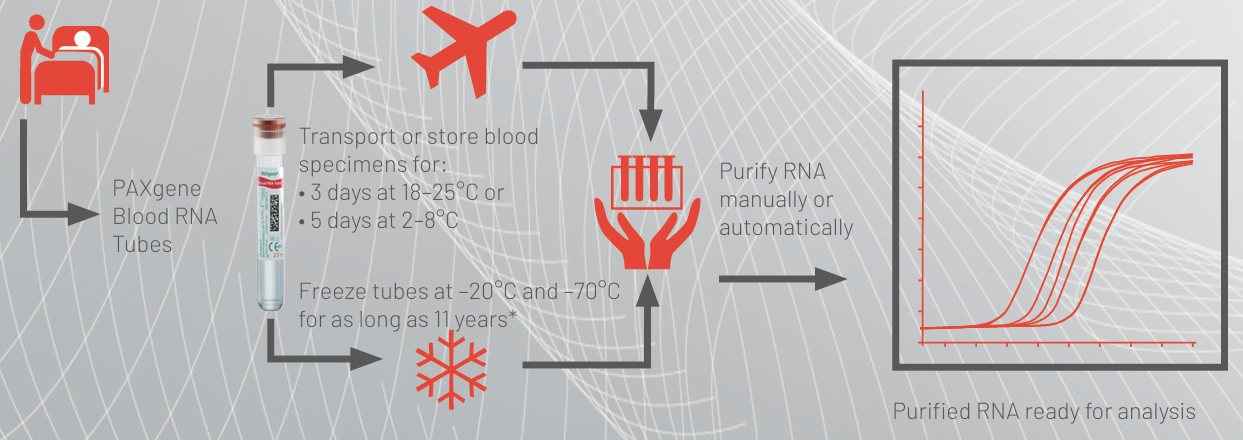
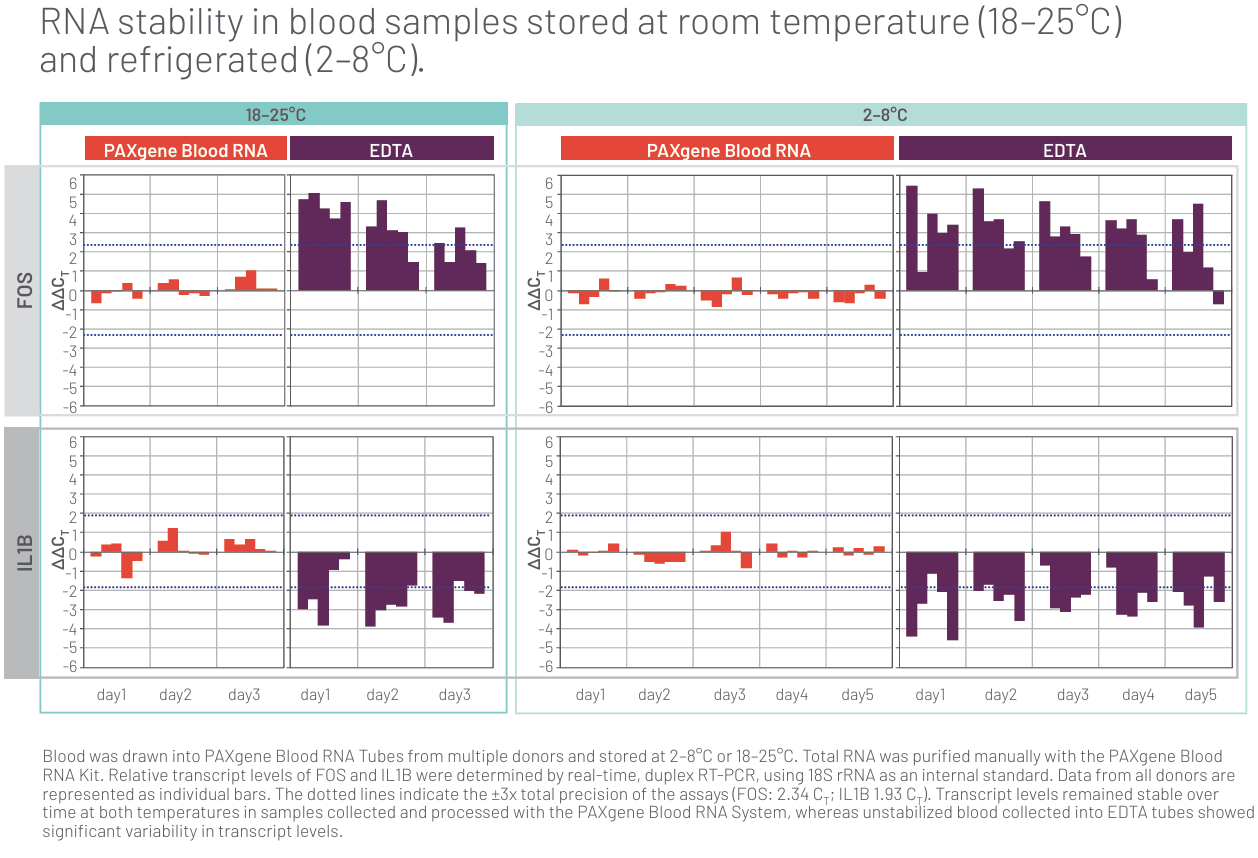
The PAXgene® Blood RNA Tube is intended for immediate stabilization of intracellular RNA, thereby yielding accurate and reproducible gene expression data.
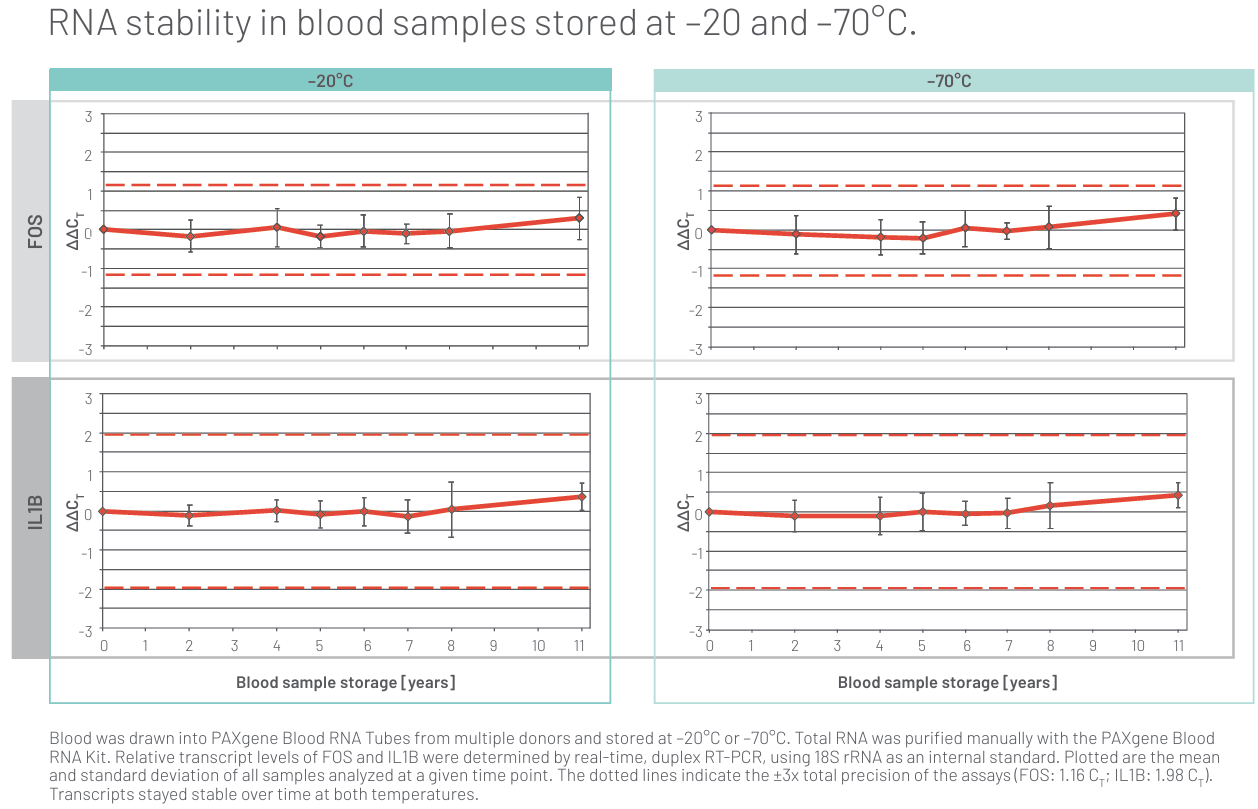
The PAXgene Blood RNA Tube contains a proprietary reagent for stabilization of intracellular RNA immediately upon collection. Intracellular RNA is stabilized for up to three days at room temperature or five days at 2-8°C. PAXgene Tubes can be frozen at temperatures of -20°C to -70°C for long-term storage.
The PAXgene Blood RNA System is the first IVD marketed product for the collection, storage, and transportation of blood and stabilization of intracellular RNA in a closed tube with subsequent isolation and purification of intracellular RNA from whole blood for RT-PCR used in molecular diagnostic testing. Performance characteristics for the PAXgene Blood RNA System have been established with FOS and IL1B gene transcripts.
The PAXgene® Blood DNA Tube (CE) is the first blood collection tube designed specifically for in vitro diagnostic DNA testing. It is intended to collect, anticoagulate, stabilize, transport, and store a venous whole blood sample for preparation of high quality DNA for use with molecular diagnostic test methods that require DNA.
Vacutainer CPT Tubes
BD Vacutainer® CPT™ is a fully-closed system for separation of mononuclear cells from whole blood, where cell separation is carried out in the primary blood collection tube. This decreases the complexity of steps for mononuclear cell separation, thereby minimizing variability from sample processing.
CPT™ is an evacuated, sterile blood collection tube containing buffered sodium citrate (362782 and 362781) or sodium heparin (362780) anticoagulant, liquid density medium and an inert gel barrier. It is intended for the collection of whole blood and the subsequent separation of mononuclear blood cells for the purposes of in vitro diagnostic examination.
Whole blood is drawn directly into the CPT™ using standard phlebotomy techniques and processed in the same tube. During centrifugation, the gel forms a physical barrier between the mononuclear cells in plasma and the erythrocytes and granulocytes. The separated, concentrated suspension of mononuclear cells in plasma can then be transported in the primary blood collection tube.
See the available CPT Products
Other available products:
• BD P800 Tubes (366420, 366421)
• BD P100 Tubes (366422, 366448)
Purchase all these products and many others from DBA Italia

Alcuni dei nostri brand